Blue Light: Hype or Healthy Habit
Blue Light: Hype or Healthy Habit?
By: Graham R. Stetson, OD, MS
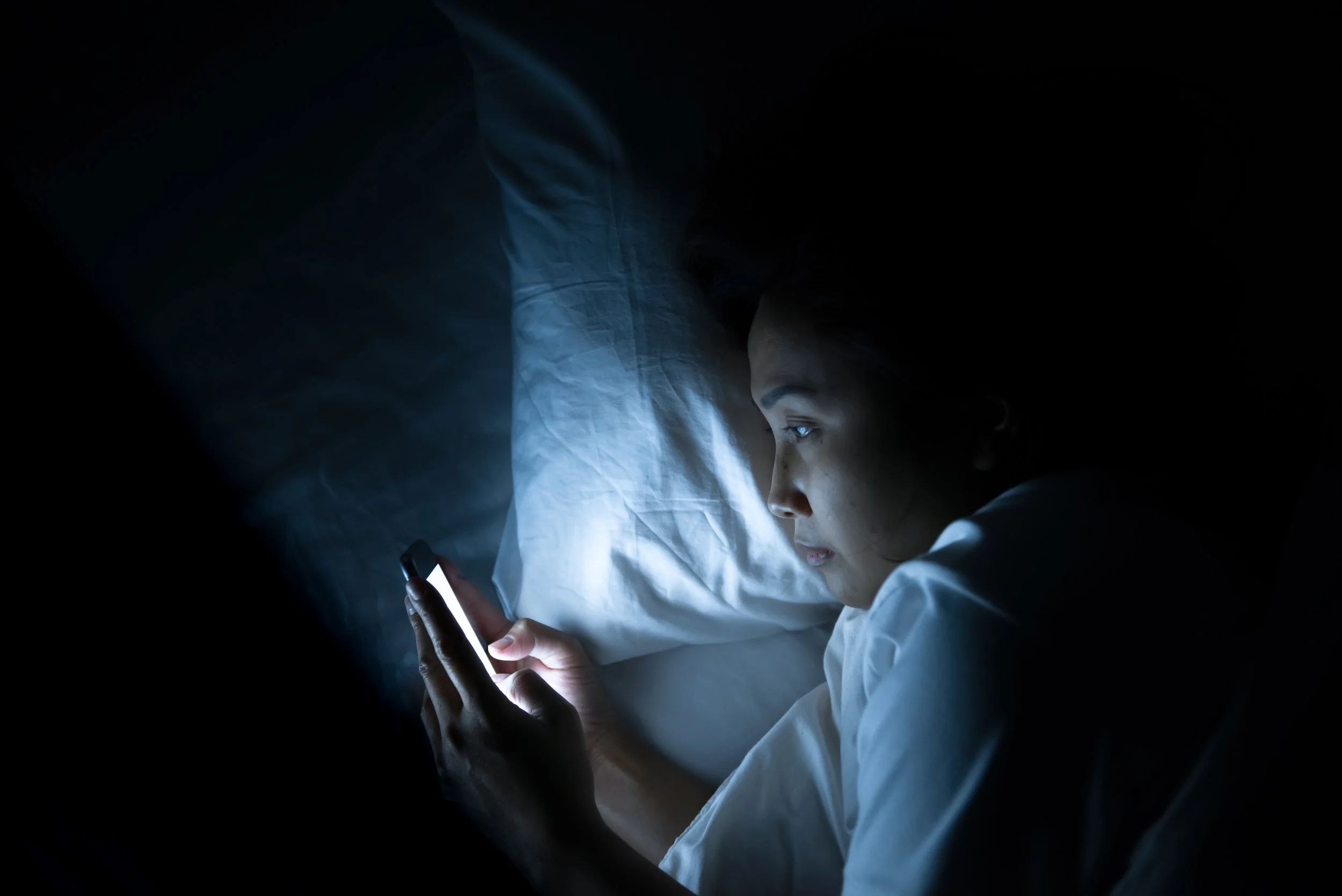
As summer brings longer days and shorter nights, quality rest is more important than ever. Yet with Americans spending over seven hours a day on electronic devices—often late into the evening—the glow of our screens is quietly disrupting our sleep and mood. Blue light filters are an often cited, but insufficient solution. Instead, here are a few facts about blue light—and some simple changes to improve your sleep.
Facts
Blue light is the high-energy, short-wavelength part of the visible spectrum. Exposure can boost alertness and mood, but timing is key. Light signals received by specialized “timekeeper” cells in the back of our eyes tell our brain’s internal “clock” whether it’s time to be awake or asleep. Exposure to blue light late in the day can confuse this system and delay sleep.
Fiction
“Blue light is why my eyes tire at work.”
Not quite. Digital eye strain comes from how we use screens—staring without blinking, focusing at one distance—not from blue wavelengths. While some find blue-light-filtering glasses helpful, regular breaks and proper ergonomics are far more effective.
“Blue light doesn’t affect me—I fall asleep watching TV.”
It does. A Harvard study found that 6½ hours of blue-rich light suppressed melatonin (sleep hormone) twice as much as green-enriched light and shifted internal sleep clocks by two hours more—leading to poor quality sleep. Another study of smartphones from the University of Salzburg showed that unfiltered nighttime use drastically reduced melatonin levels when compared to using a filter or reading a paper book.
“Blue light is always bad.”
Not true. A recent University of Pennsylvania study discovered that morning blue light can improve sleep. Getting early morning blue light exposure and reducing it after dusk helped participants fall asleep faster and reach deeper sleep stages.
Fixes
Two hours before bedtime, schedule “Night Shift” on your devices to trim the most disruptive wavelengths.
Use Amber or clear “computer” lenses (ANSI Z80.3 rated) at night to block the worst wavelengths, filtering up to 50% of blue light and easing nighttime exposure.
Follow a 20-20-20-Plus regimen when using screens: every 20 minutes, look 20 feet away for 20 seconds and blink hard five times to refresh your tear film.
Adjust your home lighting by swapping bright bulbs for dimmer, warmer 2700 K or use lamps aimed away from eye level after dinner.
Get outside early. Ten minutes of natural morning light anchors circadian rhythms, can counteract late-night scrolling.
Final Thoughts
Managing blue light is not about eliminating it entirely, it’s about timing. With a few smart habits, you can reduce sleep disruption, prevent eye strain, and enjoy sharper focus throughout the long summer days ahead.